The new rules of UK coffee shop growth
Fast-food brands, pubs and casual dining operators now compete for the same occasions.
The UK coffee shop market is still growing, but the way it grows has changed.
Expansion has slowed sharply, prices are rising faster than wider food inflation, and customers are visiting later in the day for reasons beyond the morning caffeine fix.
Fast-food brands, pubs and casual dining operators now compete for the same occasions. Meaningful Vision data points to five new rules for operators seeking their next growth opportunity.
Rule 1: Every new site must earn its place
UK coffee shop expansion slowed to just 0.8% year on year in H1 2026, down from 2.8% in H1 2025 and 4.5% in H1 2024. Across the wider branded coffee shop and bakery market, now around 13,000 outlets, estate growth this year was slightly higher at 1.2%.
Growth has not disappeared. Blank Street Coffee, Black Sheep Coffee and Joe & The Juice continue to add locations. But the market is entering a more selective phase, and as it matures, the cost of a wrong site decision only increases.
The national average also hides a regional spread of 6.5 percentage points. London is no longer the fastest-growing market. The East led with 4.9% growth, followed by Greater London at 3.2% and the South East at 2.9%. The gap between London and Greater London shows that opportunity can change materially between neighbouring markets.
Rule 2: Prices must be justified, not just raised
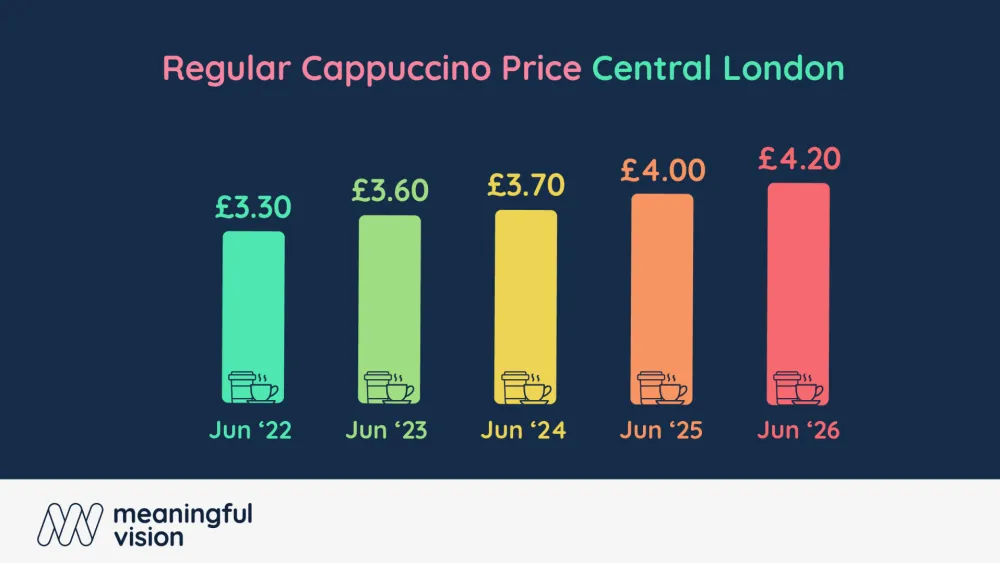
A regular cappuccino in Central London now costs around £4.20, up 27% from £3.30 in June 2022. A Starbucks Tall Cappuccino climbed almost 41%, from £3.05 to £4.30. Coffee prices across UK foodservice rose 8.2% year on year in Q2 2026, ahead of the 6.8% rise in Meaningful Vision's same-item foodservice price index.
Price positions now vary widely. A regular cappuccino costs £3.60 at Blank Street Coffee, £4.20 at Costa Coffee and Caffè Nero, £4.25 at Starbucks and £4.69 at Black Sheep Coffee. A flat white ranges from £1.99 at Popeyes to £4.50 at WatchHouse. Location type matters too: coffee at London train stations costs on average 10% more than elsewhere in the city.
The market is polarising, with value-led and premium brands gaining visits while the mid-market faces the most pressure.
"Customers may accept a premium where they can see a clear reason for it," said Maria Vanifatova, CEO of Meaningful Vision. "The risk emerges when prices rise faster than the value customers believe they are receiving."
Rule 3: Win the afternoon, not just the morning
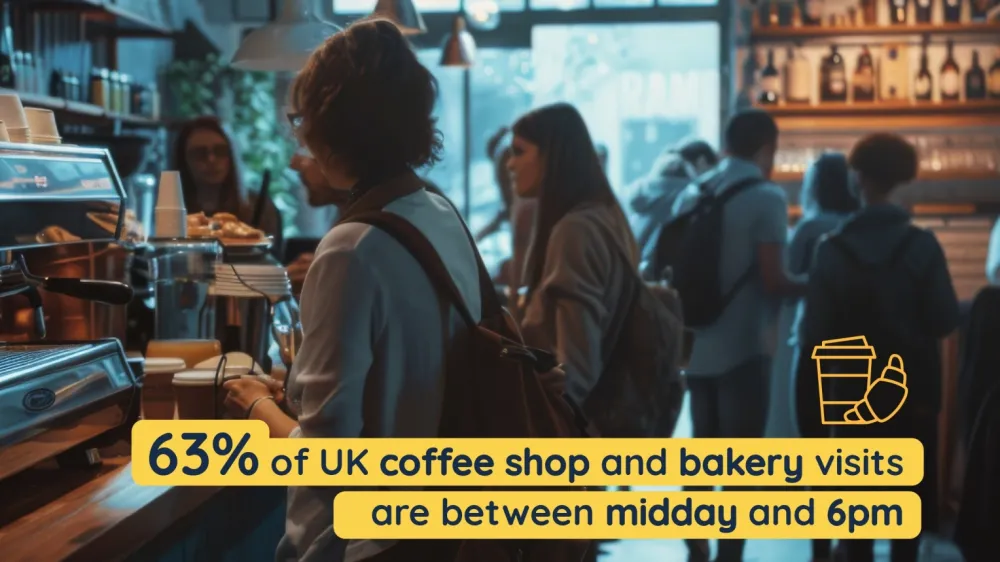
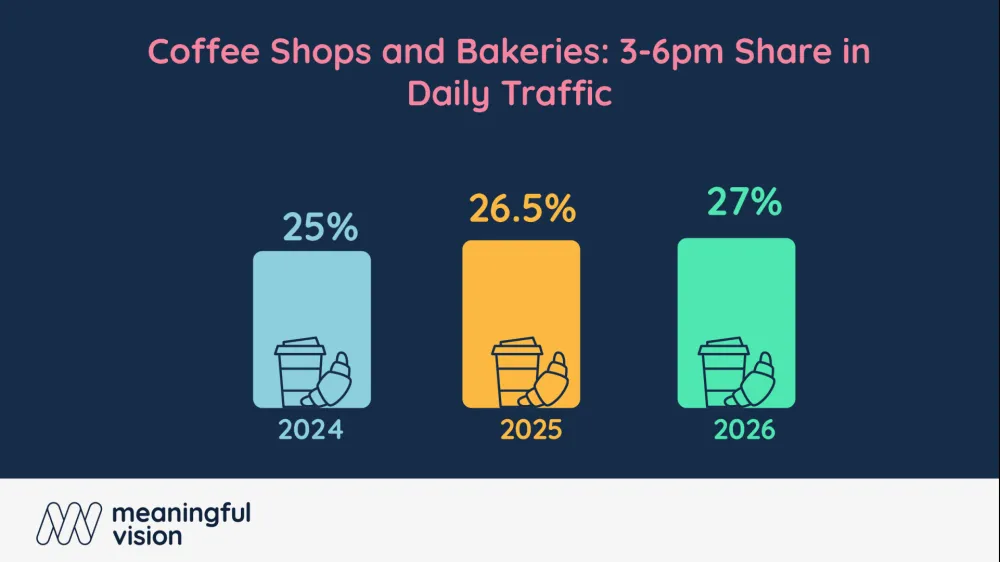
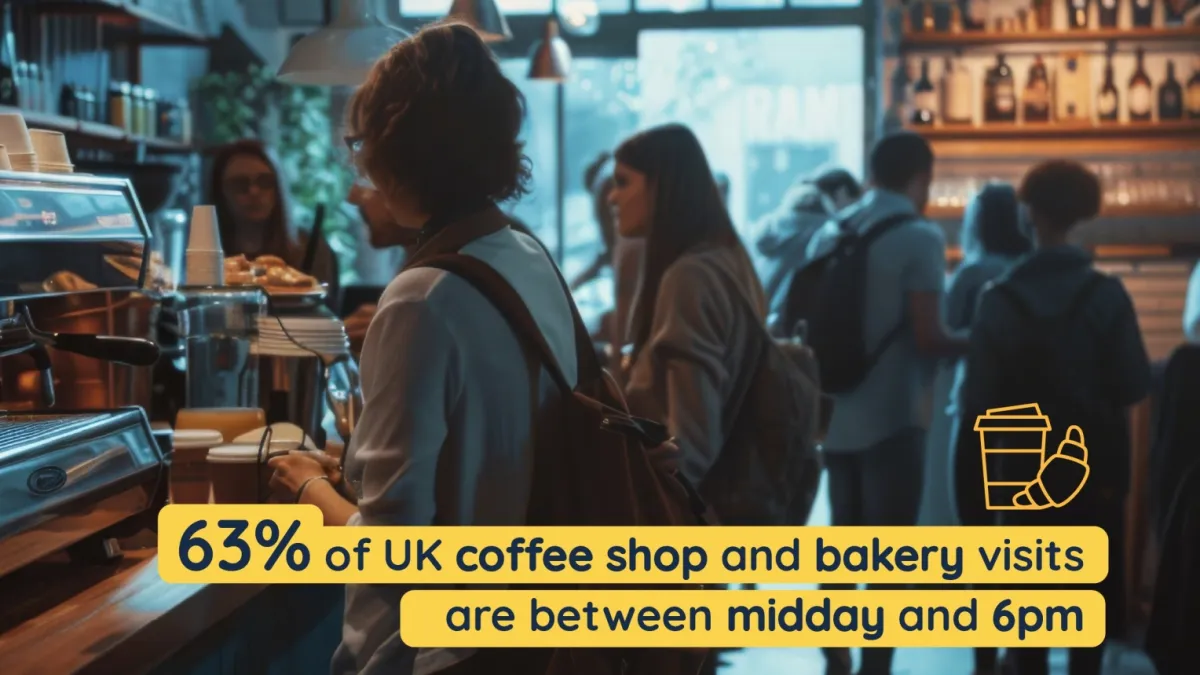
The 3PM to 6PM slot now accounts for 27% of daily coffee shop and bakery visits, up from 25% in 2024. Lunch remains the largest daypart at 36%, while 9am to midday represents 25%. Together, lunch and afternoon generate 63% of daily visits.
Operators differ sharply. 200 Degrees Coffee generates higher afternoon traffic despite sitting below the morning average, while Harris + Hoole and Coffee Republic lean towards the morning. Starbucks shows the most balanced performance across both occasions.
Rule 4: Competition extends beyond coffee chains
As coffee shops become places to meet, work and socialise, their competitive set is widening. Fast-food players are expanding coffee and matcha ranges, while pubs and casual dining compete for afternoon and evening occasions. Black Sheep Coffee and Blank Street are opening later and offering more drink varieties to attract Gen Z.
"For Gen Z, coffee shops are increasingly places to meet friends, work, study and socialise while keeping the occasion relatively affordable," said Vanifatova. "Younger consumers are also drinking less alcohol, making coffee shops a more natural choice for informal meetings later in the day."
Rule 5: New drinks bring new customers
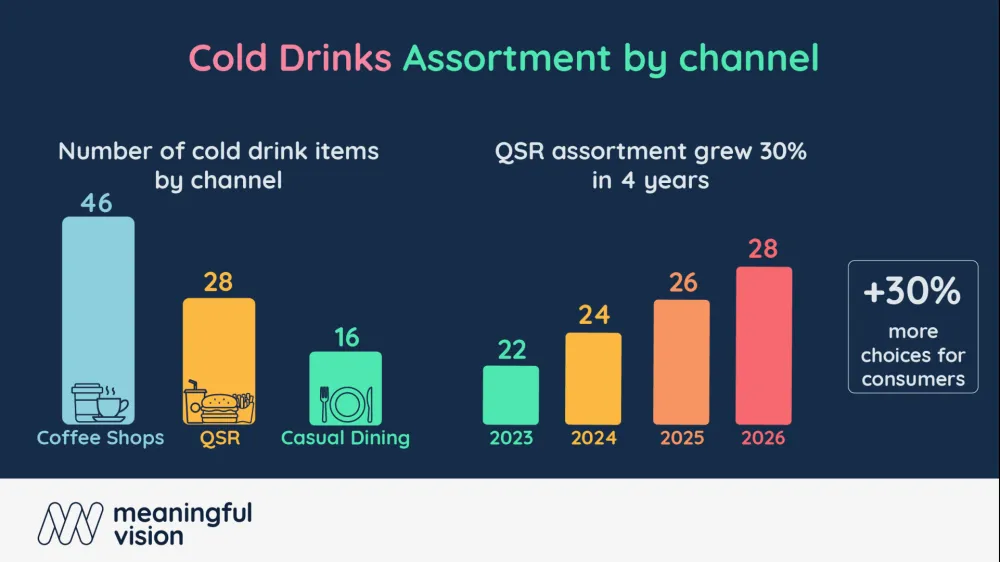
Cold drinks now make up 65% of the coffee shop drinks assortment. Coffee shops offer an average of 46 cold items, around 70% more than other fast-food outlets, where cold ranges have grown 33% since 2023 to 27 items. Matcha is moving rapidly into the mainstream: matcha products per store doubled during 2026, and coffee shops offered 16 matcha flavours in Q2 2026.
Matcha, cold coffee, lemonades, protein and functional drinks offer novelty, customisation and visual appeal on social media. Many trends start online before they reach menus, so operators who wait risk losing occasions to competitors who moved first.
Growth now depends on precision
With fewer new sites driving expansion, growth will rely more heavily on existing stores. "Coffee shop expansion has slowed from 4.5% to just 0.8% in two years, but this does not indicate a lack of opportunity" comments Maria Vanifatova. "It means decisions taken with respect to expansion need to be targeted with increasing precision and accuracy."
Connecting location intelligence, hourly customer traffic, competitor pricing and emerging menu trends is how to attain that precision in decision-making. The next growth opportunity may not be in the fastest-growing region, but in a trade zone that competitors have not yet captured, where demand is strong.