Fast food pricing pressures intensifies as traffic weakens
Growth has been largely because of new openings instead of visit frequency.
Over the past year, expansion has driven top-line growth for most UK fast-food operators. More than 1,200 new outlets were opened in 2025, bolstering a comparatively modest growth in total visits, according to Meaningful Vision.
Like-for-like traffic remains under pressure, and recent data suggests that pricing is now becoming an additional headwind. In February 2026, overall fast-food traffic declined by 1.5% year-on-year, the weakest monthly performance in recent periods. Meanwhile, prices rose again, increasing by around 0.5%.
The divergence between rising prices and stagnant or falling demand signals a structural shift in the market. Whilst fast food has historically outperformed the wider foodservice sector, supported by consumers trading down from casual dining, this effect is now beginning to stabilise.
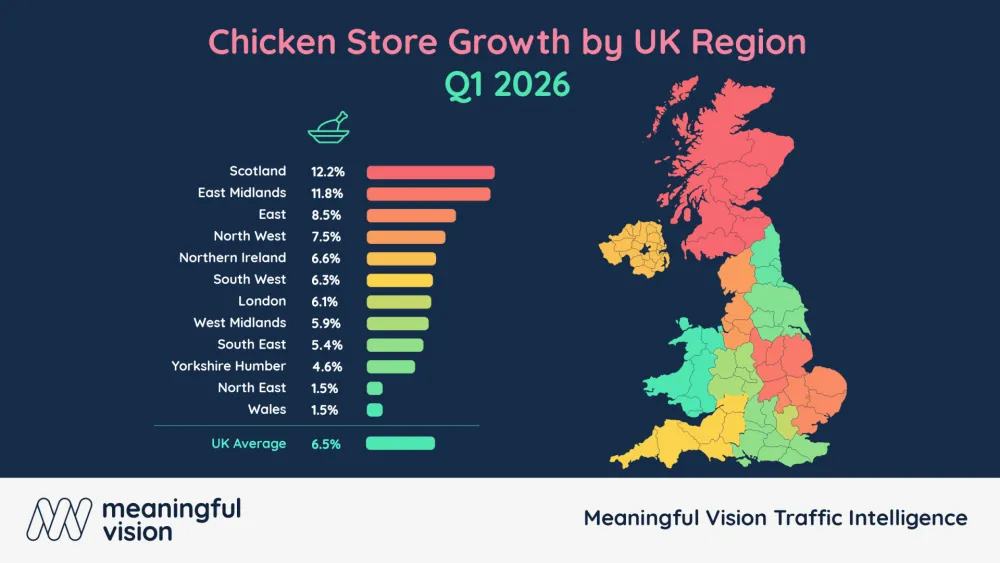
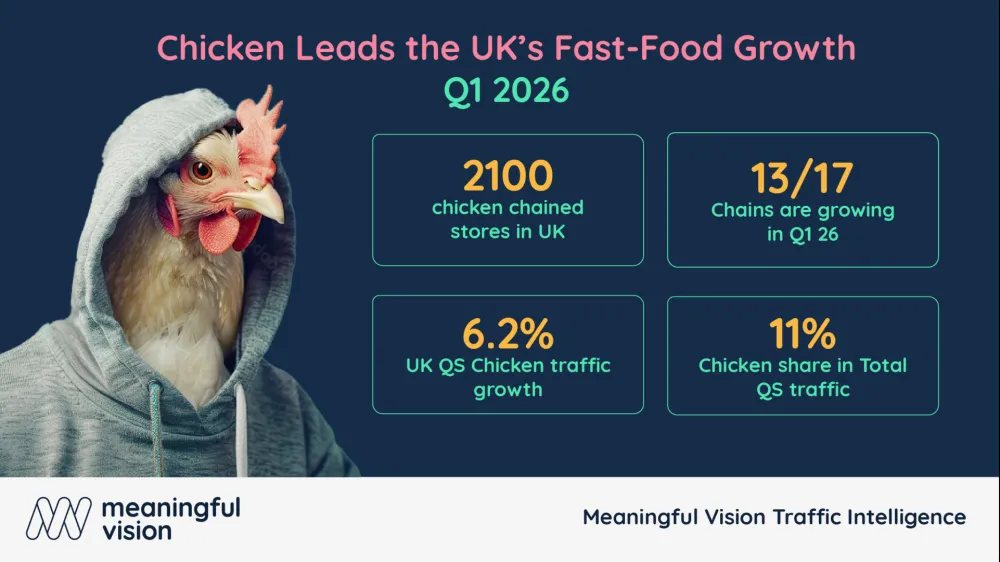
At the same time, more than half of the leading brands are experiencing a decline, with growth concentrated amongst chicken, coffee, and American concepts, largely driven by new openings rather than increased visit frequency.
The underlying cost drivers are well understood. Labour remains the primary pressure point, with the April 2026 increase in the National Living Wage expected to significantly raise operating expenses.
Additionally, higher business rates and continued food cost inflation, particularly in categories such as beef and coffee, are adding further strain. As a result, foodservice inflation has diverged sharply from retail, with restaurant prices rising significantly faster.
Operators are left with limited options. Passing costs onto consumers through price increases is becoming hard to avoid, yet this strategy is constrained by weakening demand and growing price sensitivity.
February performance suggests consumers are becoming more reactive to price changes, reducing visit frequency even within fast-food, traditionally the most resilient segment.
Pricing pressure is also visible at the category level. In February, price growth was broad-based, with hot drinks increasing by 14%, breakfast items by 10% and burgers by 9%. Sides and chicken-based products rose by around 8%, while cold drinks increased by 6%. Pizza remained the most price-competitive category, with growth limited to around 3%, reflecting intense competition, particularly in delivery. Concurrently, lower-priced items below £5 recorded the strongest increases, highlighting pressure on entry-level price points, while mid-tier pricing between £10 and £15 is emerging as a key battleground for balancing margin and demand.
Industry commentary reinforces the outlook. Operators warn that cumulative cost pressures in 2026 are likely to exceed those seen in 2025, with wage increases representing a new step-change. Combined with energy costs and business rates, this creates sustained pressure on margins, particularly for mid-sized and independent operators.
In this environment, pricing strategy is evolving from a reactive lever to a core strategic capability. Blanket price increases carry considerable risk. Instead, operators look to target particular menu areas or products with a more granular approach to optimising performance, including location-based pricing, channel differentiation, and daypart variations. For some brands, price variation across locations can reach up to 25%, reflecting significant differences in local demand and competitive intensity.
Value perception is rapidly gaining importance with respect to pricing strategy. Around 20% of fast-food menu items are now meal deals, and approximately 40% of all promotions are linked to bundles and combos.
Brands that historically have not relied on such mechanics are now adopting them. Limited-time offers and app-based promotions are no longer tactical tools but structural components of pricing architecture, allowing operators to maintain accessible entry points like the £5 threshold while driving higher average spend through bundling and upselling.
“This approach also has limitations. As more brands converge around similar price points and promotional strategies, differentiation becomes harder to sustain. There is a growing risk that promotions drive volume without delivering incremental profitability, particularly when not supported by precise data and targeting,” Maria Vanifatova, the CEO of Meaningful Vision, said.
Vanifatova expects further price increases to be likely as cost pressures continue to build, but demand growth is expected to remain subdued. Traffic per store may continue to decline as outlet numbers remain elevated and competition intensifies across key segments and dayparts.
“The key question for operators is not whether to increase prices, but how to do so without compromising demand,” she said.