Value, quality, or convenience: What’s really driving UK QSR choice in 2026?
By Richard Moller, Research Director, YouGov
The UK quick service restaurant (QSR) market remains one of the most competitive sectors in food and beverage. But in 2026, the challenge isn’t just attracting customers but also staying relevant in a landscape shaped by tighter household budgets and rising expectations.
Fast food remains firmly embedded in British dining habits. Yet beneath that consistency lies a more nuanced reality: consumers are becoming more selective, more value-conscious, and more deliberate in how they choose where to spend.
Fast food is habitual, but not guaranteed
Despite economic pressure, QSR continues to play a regular role in everyday life. Over half of Brits (51%) purchase food or drinks from fast-food restaurants at least once a month, highlighting the category’s enduring relevance.

However, frequency alone doesn’t equal loyalty. Only 14% of the population qualifies as weekly fast-food diners, and this group looks very different from the national average. They skew younger (51% under 40), more male (59%), and more affluent (33% higher income vs. 24% nationally).
For operators, this signals something important: the most engaged QSR customers are not just frequent, but also potentially the most commercially valuable. Winning this segment requires more than ubiquity; it requires precision.
Quality still leads—but value defines the choice
When it comes to choosing where to eat, three factors dominate: quality of food (46%), convenient location (44%), and value (40%).

At the same time, the biggest barriers to purchase reinforce this hierarchy. High prices (60%), bad value for money (53%), and long wait times (50%) top the list of deterrents.
This dynamic reveals a critical shift. Consumers are not simply trading down but also weighing trade-offs more carefully. Price alone is not the deciding factor; perceived value, anchored in quality and experience, carries more weight.
In practical terms, brands that compete purely on cost risk losing ground to those that can justify their pricing through consistency, speed, and food quality.
What separates the most considered brands
This balance between value, quality, and convenience is reflected in our just released YouGov UK quick service restaurant rankings.
Greggs leads the market with a 39.4% consideration score, followed by McDonald’s (35.9%) and Costa Coffee (29.9%).

What stands out is the diversity of the top tier. The leaders are not defined by a single positioning (some lean into value, others into familiarity or accessibility) but all succeed in delivering a clear, consistent proposition.
Dig deeper, and the picture becomes even more fragmented. Brand consideration varies significantly by gender and age, with different cohorts favouring different brands.
There is no universal playbook for success. Instead, winning brands align closely with the expectations of specific audiences and execute reliably against those expectations.
Winning means owning the occasion
Beyond overall rankings, category leadership is highly fragmented across food types. Different brands dominate different occasions in consumers’ minds.
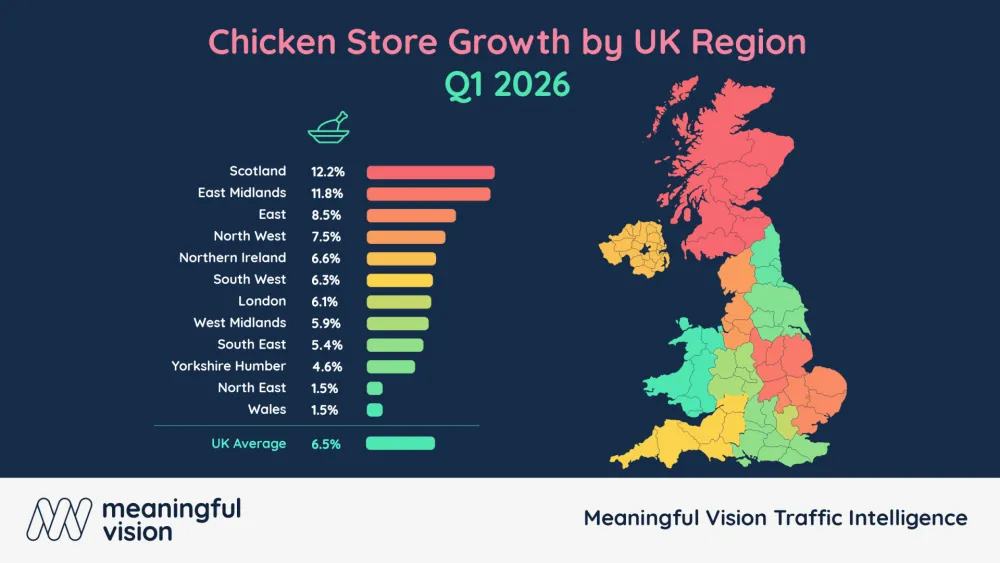
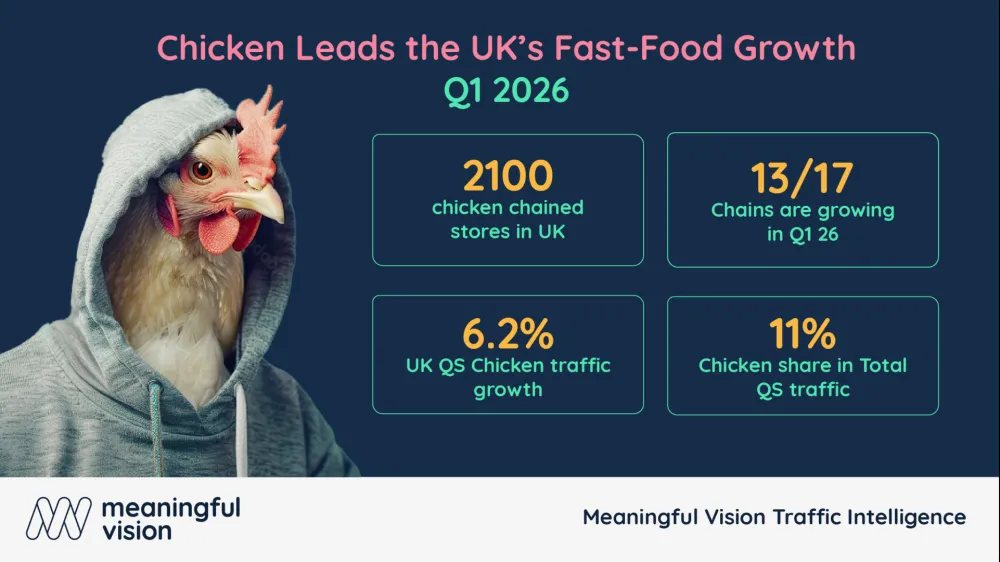
Burger King leads for burgers (18.7%), KFC for chicken (35.7%), Costa Coffee for coffee (20.3%), Domino’s for pizza (22.8%), and McDonald’s for chips (28.3%).
This highlights a key competitive truth: consumers don’t choose QSR brands in isolation; they choose them based on specific needs, cravings, and occasions.
For operators, this creates both a challenge and an opportunity. Broad appeal is valuable, but distinct ownership of a category or need state can be a powerful driver of preference.
Emerging pressures on demand
While demand remains strong, there are early signs of change in how consumers engage with the category.
Among UK users of GLP-1 weight loss drugs, 53% report cutting back on fast food consumption.

At the same time, average weekly spend on takeaways drops from £46 to £31 after adopting these treatments.
Although still a relatively niche trend, it points to a broader shift: health considerations and behavioural changes could begin to reshape demand in the longer term.
A more selective QSR consumer
The UK QSR market in 2026 is not shrinking, but it is evolving.
Consumers continue to rely on fast food, but they are more intentional in their choices. Quality remains the foundation, value defines the decision, and convenience enables it.
For brands, the implication is clear. Success is no longer about being the cheapest or the most visible—it’s about delivering the right combination of attributes, consistently, to the audiences that matter most.
The full picture, including detailed rankings, demographic insights, and deeper analysis of consumer behaviour, is explored in YouGov’s Best Bites 2026: UK QSR rankings report.