Restaurant inflation outpaces retail as operators rethink pricing
Rising labour and food costs force operators to adopt more targeted pricing strategies.
Restaurant price inflation is accelerating ahead of retail, forcing operators to rethink how they price menus in 2026 as cost pressures continue to build across the sector.
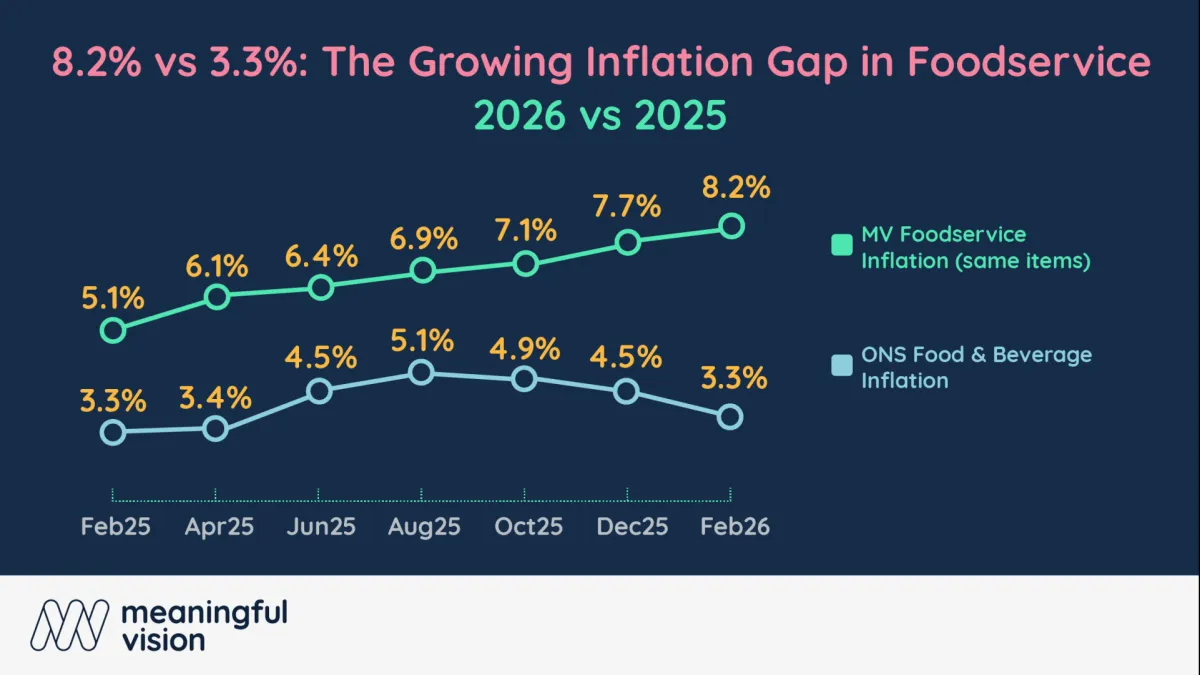
The inflation gap between foodservice and retail is widening sharply. Data from Meaningful Vision revealed that in February 2026, restaurant prices rose by 8.2% year on year, whilst retail food inflation remained stable at 3.3%. This marks a significant acceleration from 2025, when the gap was already notable but less pronounced.
This divergence reflects the structural pressures facing hospitality. Retail has benefited from more stable supply chains and pricing dynamics, but foodservice operators continue to absorb higher labour, energy and input costs, pushing menu prices upwards.
Pricing in 2025 followed a clear pattern of escalation. The first wave came in March, driven largely by labour cost increases, followed by further price rises in July and November linked to higher beef and coffee costs. Prices then stabilised briefly towards the end of the year, before rising again in early 2026.
As a result, foodservice inflation has increased by more than three percentage points year on year, whilst retail inflation has remained largely unchanged, highlighting how cost pressures are compounding rather than easing for operators.
The sector is now entering another phase of cost escalation. The upcoming increase in the National Living Wage, alongside higher business rates and continued food cost inflation, is set to further raise the cost base across the industry.
Labour remains one of the most significant pressures, where even small increases can have a disproportionate impact on margins. At the same time, supply chain challenges persist, with commodity volatility and rising oil prices adding further uncertainty.
Operators are responding by revisiting their pricing strategies, but the ability to pass on costs is becoming more constrained. Consumer demand is weakening, and price sensitivity is increasing across all segments.
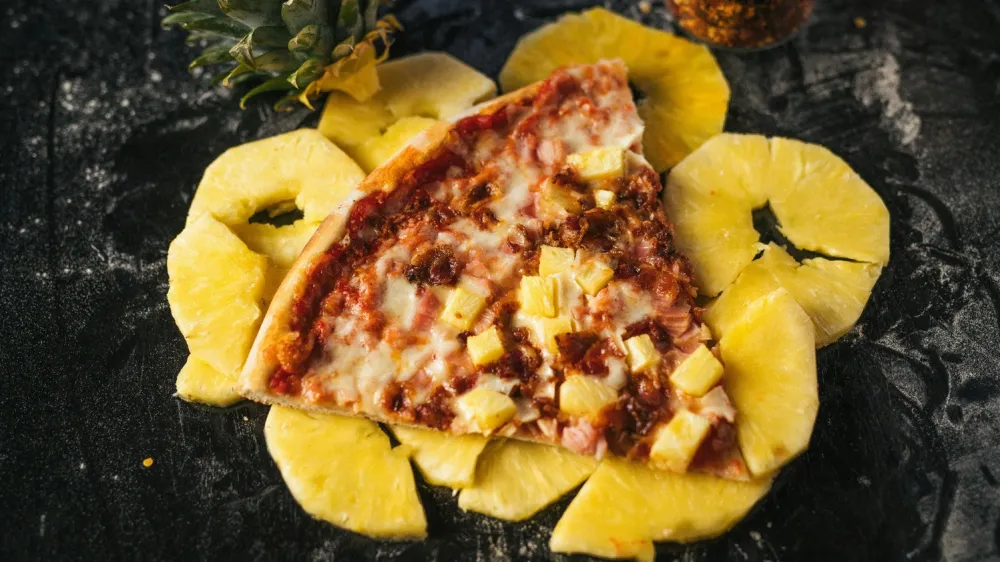
This tension is particularly visible in pizza delivery, where price growth remains closer to retail levels. As a highly price-driven segment, operators rely heavily on promotions and competitive pricing to retain customers, limiting their ability to increase prices aggressively.
In response, operators are moving beyond blanket price increases towards more targeted approaches. Variable pricing by location, channel and time of day is gaining traction, allowing brands to optimise revenue more precisely. For some operators, price differences can reach up to 25%, whilst others adopt more moderate adjustments of around 8%.
Data and technology are central to this shift, with access to real-time competitor pricing and market insights enabling more informed decision-making and reducing the risk of mispricing.
Maria Vanifatova, CEO at Meaningful Vision, said pricing is no longer simply a reaction to cost pressures. “
The brands that will outperform in 2026 are those that use data to price with precision, protect their value perception, and adapt dynamically to changing consumer sensitivity," Vanifatova said.