Papa Johns franchisee pivots to AI to combat labour stress
Cost pressures accelerated digital maturity to strengthen UK business resilience.
Rising costs and shifting consumer behaviour are pushing franchise operators to prioritise digital efficiency and selective expansion to protect margins and sustain long-term growth.
Speaking with Mandy Kaur Bhullar, a Papa Johns operator with over 40 restaurants, she shares how trading conditions have evolved over the past two years, the cost pressures shaping operational decisions, and why technology, patience, and disciplined site selection are becoming critical to growth in the current environment.
How have trading conditions changed for you over the past 18 to 24 months across your portfolio
Over the past 18 to 24 months our focus has shifted towards selective growth across our portfolio. The immediate pressures coming out of the cost-of-living squeeze meant many operators were simply trying to stabilise the business. For us, that period also accelerated our digital maturation, spurring us to invest more heavily in systems, data and workflow integration to make the business more resilient.
As conditions have started to stabilise, we’ve been able to move from defensive measures into more targeted growth, focusing on stores and markets where we see strong long-term potential, rather than expanding purely for the sake of scale.
What are the biggest cost pressures you are currently managing, and how are you mitigating them?
Product, labour and energy remain the three biggest cost pressures for us. These are structural costs that every operator in hospitality is having to deal with to some extent right now.
To manage that, we’re investing heavily in operational efficiency. That includes executing more complex workflows across multiple software systems so we can streamline processes and reduce friction in day-to-day operations. We’re also digitising parts of the workplace wherever possible and using stronger inventory intelligence to control dead stock and waste. Small efficiencies at store level make a big difference when you’re operating at scale.
How are consumer expectations around value influencing pricing and promotional strategy in your stores?
Customers are understandably more value-conscious at the moment, but that doesn’t mean they’re willing to compromise on quality. Our focus has been on managing those expectations carefully without compromising the product.
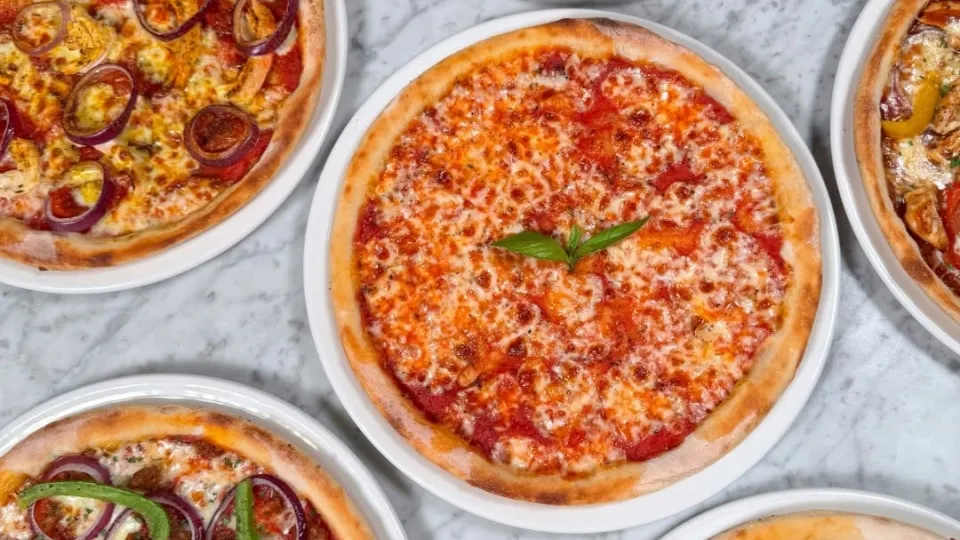
Pizza can be quality-led purchase, so maintaining the integrity of our food is critical – and we pride ourselves on better ingredients.
We think about value in terms of the overall experience, the product’s quality, a reliable service and smart promotions, rather than simply competing on price alone.
What operational efficiencies have made the biggest difference at scale?
Again, digitisation has been one of the biggest drivers of efficiency across the portfolio. As we’ve grown, having efficient systems that connect ordering, inventory, labour and reporting has become essential.
Inventory intelligence in particular has helped us control stock levels more effectively and reduce waste and control dead stock levels. When you’re running dozens of sites, those operational improvements compound very quickly.
How do you balance strict brand standards with the realities of running stores in different local markets?
It’s always a balance. Global brand standards and guidelines are there for a reason – consistency is important! At the same time, franchisees operate in different areas, so there has to be room for local hustle and entrepreneurial thinking. The key is finding that balance where the brand stays protected, but operators can still respond to the realities of their local communities.
What kind of support from the franchisor is most critical in the current climate?
Transparency is key. The relationship between a franchisor and franchisee should never feel like ‘us and them’. Timely support is very important. There are so many missed opportunities in the hospitality sector due to a lack of support from franchisors. Strong communication, clear alignment on strategy, and practical operational support make a big difference when navigating a challenging trading environment.
Maintaining the delicate balance between the brand’s national – and in my case global - standards and the franchisee’s objectives is important to success.
When evaluating new growth opportunities today, what makes a site viable?
Patience is key. Expansions must consider how any newer sites will fit into a broader portfolio: delivery demand, digital ordering behaviour, labour availability and the long-term growth potential in the area. Expansion has to be more strategic than simply adding new stores.
What mistakes do you see newer franchisees making in today’s environment?
One common mistake new franchisees often make is assuming the business will generate quick returns. In reality, building a successful franchise operation takes patience and consistency.
New operators sometimes underestimate the importance of focusing on the basics every day: maintaining product quality, delivering good service, and building trust with customers. If those fundamentals are right, the business benefits over time.
What mindset shift is most important for franchisees who want to expand now?
Even if franchisees want to expand now, patience should remain at the front of their minds. We opened our first Papa Johns store in 2008 with a plan to operate ten stores. In wasn’t until 2021 that the opportunity came to us to expand.
Today we operate more than 40 stores across the country, but that growth was built over many years of learning, refining operations and waiting for the right opportunities.
Looking ahead to the next 12 to 24 months, where do you see the biggest risks and the biggest opportunities?
One of the biggest challenges competing on value. Customers are becoming less loyal and more willing to move between brands depending on offers or convenience. We have to work hard to keep our loyal fans. There are real opportunities to build emotional loyalty through CSR efforts like sustainability and charitable work. As a brand, we are working closely with Crisis – 50p from every Papa’s Meal Deal sold goes to the charity to support their mission to end homelessness.
Technology will also continue to reshape operations. While over-automation risks losing the human touch - which will always be so important in hospitality - AI-driven, agentic systems will improve efficiency and help manage labour stresses. In saying that, I do believe in a friendly face behind the counter - you can always expect that in my stores!