Seven QSR trends shaping strategy in 2026
Foodservice market is forecast to exceed £85b by 2026.
Success in the quick service restaurant (QSR) industry is shifting toward disciplined, data-driven choices as brands contend with inflation, labour pressures and changing consumer behaviour.
According to a report by CACI, the UK foodservice market is forecast to exceed £85b by 2026, with QSR and delivery-led formats driving much of the growth.
However, operating pressures remain significant, with labour and food inflation increasing costs by 20–30% since 2019 and more than half of consumers actively reducing discretionary spending, including eating out.
At the same time, digital channels now influence the majority of transactions, reshaping ordering, loyalty and customer engagement.
Artificial intelligence (AI) has emerged as one of the most significant forces reshaping QSR operations, moving well beyond early-stage experimentation. In 2026, AI is increasingly embedded in forecasting, pricing, labour scheduling and customer engagement systems. Machine-learning models are reducing demand forecasting errors by up to 52% and cutting food waste by as much as 25%, the report noted.
However, operators are seeing stronger results only when AI is built on high-quality data. Without strong customer, behavioural and location data, AI systems risk reinforcing inefficiencies instead of fixing them.
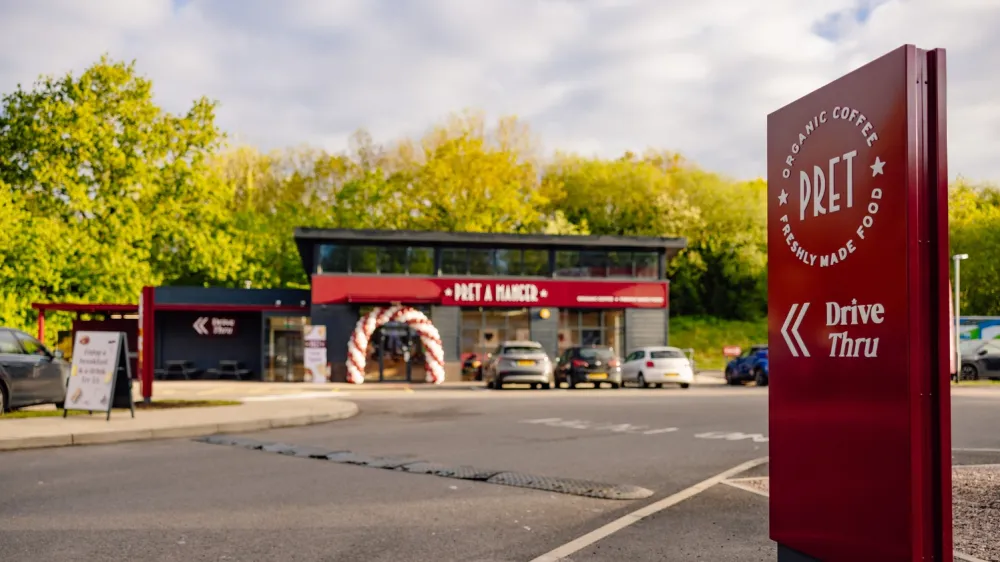
Despite growth in delivery and digital ordering, drive-thru still accounts for nearly 75% of sales in mature QSR markets. The channel is now being reshaped by voice AI, reducing order times by 20–30 seconds, and by queue analytics to manage peak congestion.
The report said that speed alone is not enough, with order accuracy and service quality having a greater impact on repeat visits.
“By analysing demand patterns by site, time of day and customer mix, they are better able to balance speed, accuracy and service quality,” CACI said. “This approach helps direct investment towards the locations and peak periods where improvements deliver the greatest return.”
Customers also now expect seamless movement between apps, kiosks, drive-thru and delivery platforms. Multi-channel customers are 2.5 times more valuable, and loyalty users drive over 70% of digital revenue in leading brands. The main challenge is fragmented data systems, pushing operators toward unified customer views.
With rising cost sensitivity, more than 50% of UK consumers compare prices before choosing where to eat. Bundled meals increase average order value by 8–12%, whilst limited-time offers support trial. Brands are increasingly tailoring value strategies to specific locations rather than relying on national campaigns in order to protect margins.
Over 75% of consumers also expect recyclable or compostable packaging. Packaging redesigns can reduce material costs by 10–15%, whilst food waste remains a major emissions driver.
In response, leading brands are integrating sustainability metrics directly into operational decision-making, using granular data to test and scale changes based on measurable outcomes.
More than 40% of consumers seek healthier options when dining out. Demand is strongest for protein-rich and plant-based items, along with clear nutritional information.
Rather than expanding menus broadly, operators are increasingly tailoring health-focused offerings to specific locations and customer groups to avoid unnecessary complexity whilst maintaining relevance.
Virtual brands and ghost kitchens remain in use but are increasingly disciplined. Success depends on demand modelling, location choice and delivery economics, with operators focusing on avoiding cannibalisation of existing sales.
Looking ahead, the QSR sector is expected to continue converging with broader retail and digital commerce ecosystems. Automation will expand further, but human interaction is expected to remain a critical component of customer experience.
Industry leaders are increasingly focused on investing in insight rather than infrastructure alone, optimising at a local level whilst ensuring innovation is tied to measurable commercial outcomes.
“In a volatile environment, clarity beats complexity — and data-led decision-making is the most reliable route to sustainable growth,” the report said.