Fast food footfall sees two-year low in Q1 amidst consumer cutbacks
Only a few regions saw customer traffic rise.
Fast food and casual dining restaurant traffic declined 2.3% in the first quarter of 2026, the biggest drop in footfall for two years, according to Meaningful Vision.
The decline is the result of consumers cutting back as cost-of-living pressures continue.
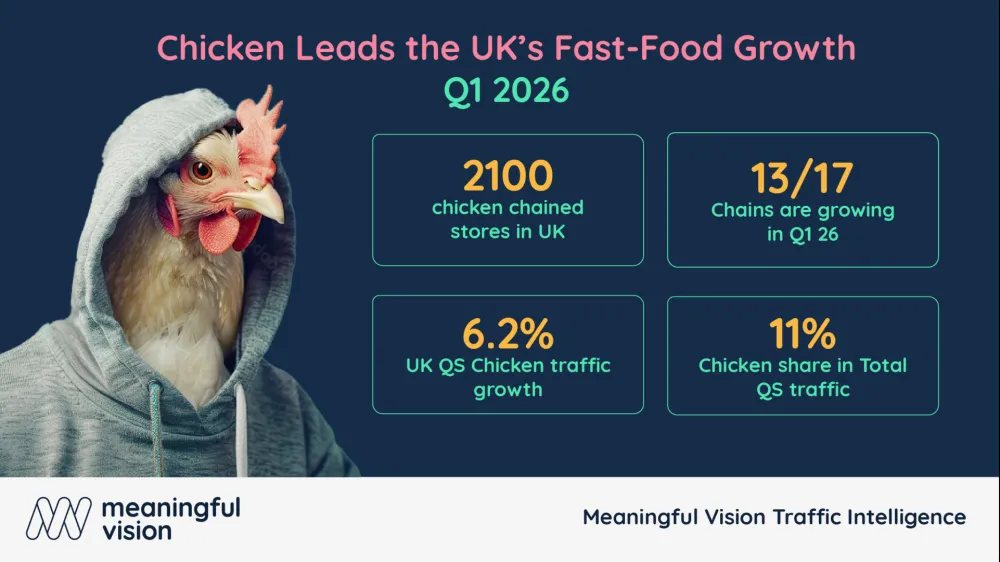
Pub and restaurant traffic declined sharply, down 7.6% during the quarter, after seeing a -6.9% decrease in 2025. Even the typically resilient fast food sector saw a 1.2% fall, compared to 1% growth during the same period last year, with only chicken shops (6.2%) and ethnic food stores (3.5%) welcoming more customers.
Only the South East (2.7%), Greater London (4.1%), and the South West (15.9%) saw a rise in footfall during January to March. This could also be a result of the cost-of-living crisis and travel disruption, as Brits started to save more on international trips by booking local weekend or holiday destinations instead. By contrast, London saw a 5.8% decline in customer traffic and its share of the total market shrank by 0.8%, the highest of any region.
Whilst figures from the Office for National Statistics (ONS) suggested the retail inflation for food and beverage products rose from 3% to 3.7% in the first quarter of 2026, Meaningful Vision’s analysis indicated prices in restaurants grew up to 8% to 2.3% higher than a year ago.
This accelerated in February and March after three months of stable inflation, with increases across all categories, particularly ‘extras and dips’ (13.6%) and hot drinks (13.5%).
Against such an uncertain backdrop, fast food and casual dining chains began to put a brake on their expansion plans. Outlet growth has more than halved since the third quarter of 2025, falling from 2.4% to 1.1%.
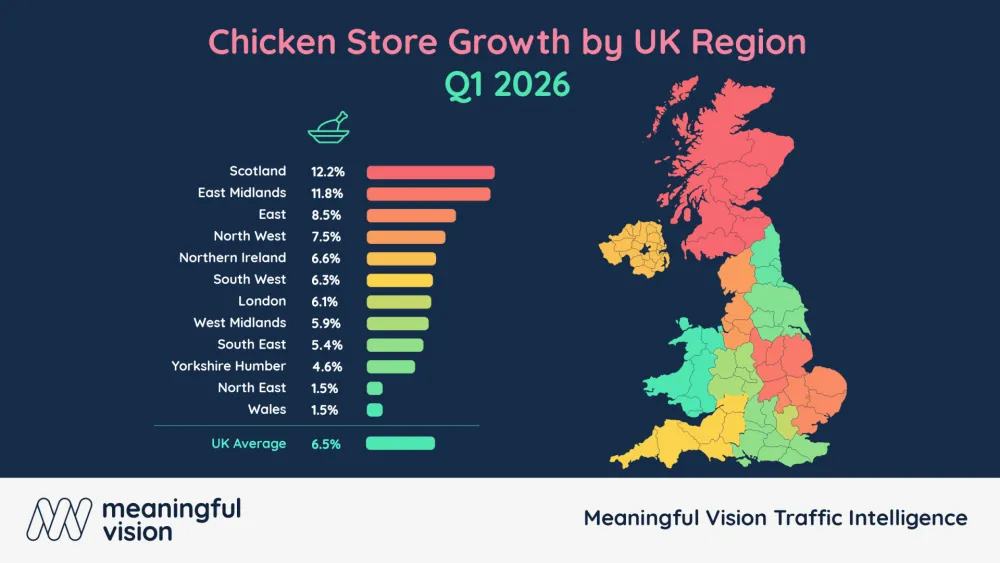
Chicken and ethnic food stores were the only sectors to increase their number of outlets in Q1 2026, with 6.2% and 3.5% growth respectively. Meanwhile, the number of pizza stores continued to fall, with a 3.2% fall compared to the same time last year, building on the 1% decline during 2025, when it was the only market segment to contract.