Chicken and ethnic concepts lead footfall growth
Burger traffic declined by 2.6%, coffee fell by 2.2%.
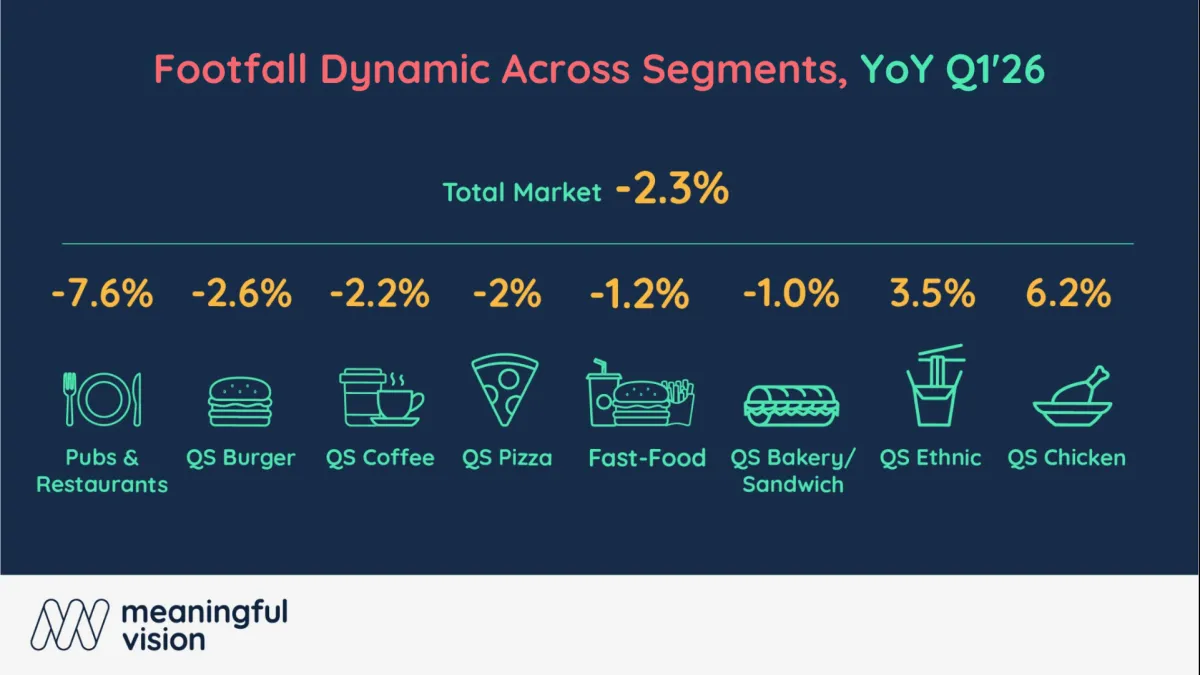
UK foodservice traffic fell 2.3% year on year in Q1 2026, but chicken and ethnic food concepts bucked the trend, emerging as the only major quick service categories to record growth, according to the latest data from Meaningful Vision.
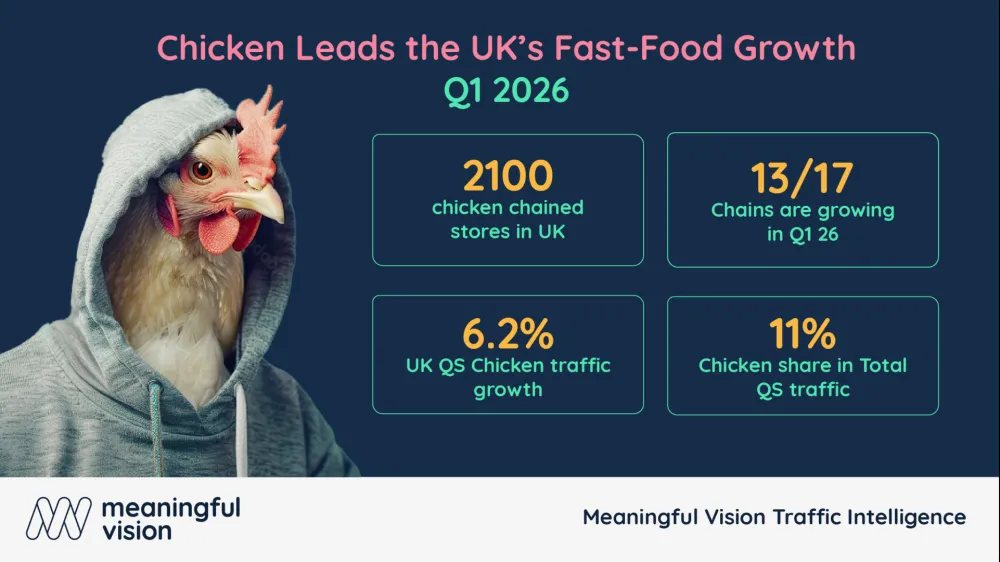
Chicken concepts saw traffic increased by 6.2% year on year. Ethnic food concepts also performed strongly, with traffic up by 3.5%. Both segments improved on their 2025 performance, suggesting that growth is not only being supported by broader quick service demand, but by specific consumer preferences around format, value and occasion.
The weakest performance came from pubs and restaurants, where traffic fell by 7.6%. This followed a 6.9% decline across 2025, showing that casual dining and pub occasions remain under the greatest pressure as consumers continue to reduce discretionary visits.
Burger traffic declined by 2.6%, coffee fell by 2.2%, pizza was down by 2%, and bakery and sandwich operators slipped by 1%. Fast-food overall also moved into negative territory with traffic falling by 1.2%, its sharpest decline since 2025, reversing the 0.9% growth recorded last year.
Maria Vanifatova, CEO of Meaningful Vision said this divergence points to a more selective market. Consumers are not abandoning eating out completely, but they are making sharper choices about where and when to spend. Formats that combine perceived value, speed, flavour variety and strong takeaway appeal appear better placed to protect traffic.
“The most important lesson to be learned from analysis of the segment data is that the market is not moving solely in one direction. Total foodservice traffic is down, and pubs and restaurants remain under significant pressure, but chicken and ethnic food continue to grow. We can see that consumers are still willing to spend when the offer feels relevant, convenient and good value. Operators need to look beyond the headline decline and understand which formats are still creating demand," Vanifatova said.